Echoes in Batik
Echoes in Batik project focuses on providing VR cultural education experience in Batik making process blending gamification and storytelling
Virtual Reality
Overview
Target user: Indonesian young adults, 18-25 years old (main users) and general young adults (additional users)
Requirement: Master degree specialist project
Context: Education and culture
Timeline: 3 months (2025)
Tools: Meta Quest Pro 3, Blender, Figma, Unity, Mixamo, Procreate, and VSCode
Provide a gamified virtual reality (VR) education experience on educating traditional Batik (Indonesian national pattern) making process in an engaging experience for MA Digital Design Futures final project.
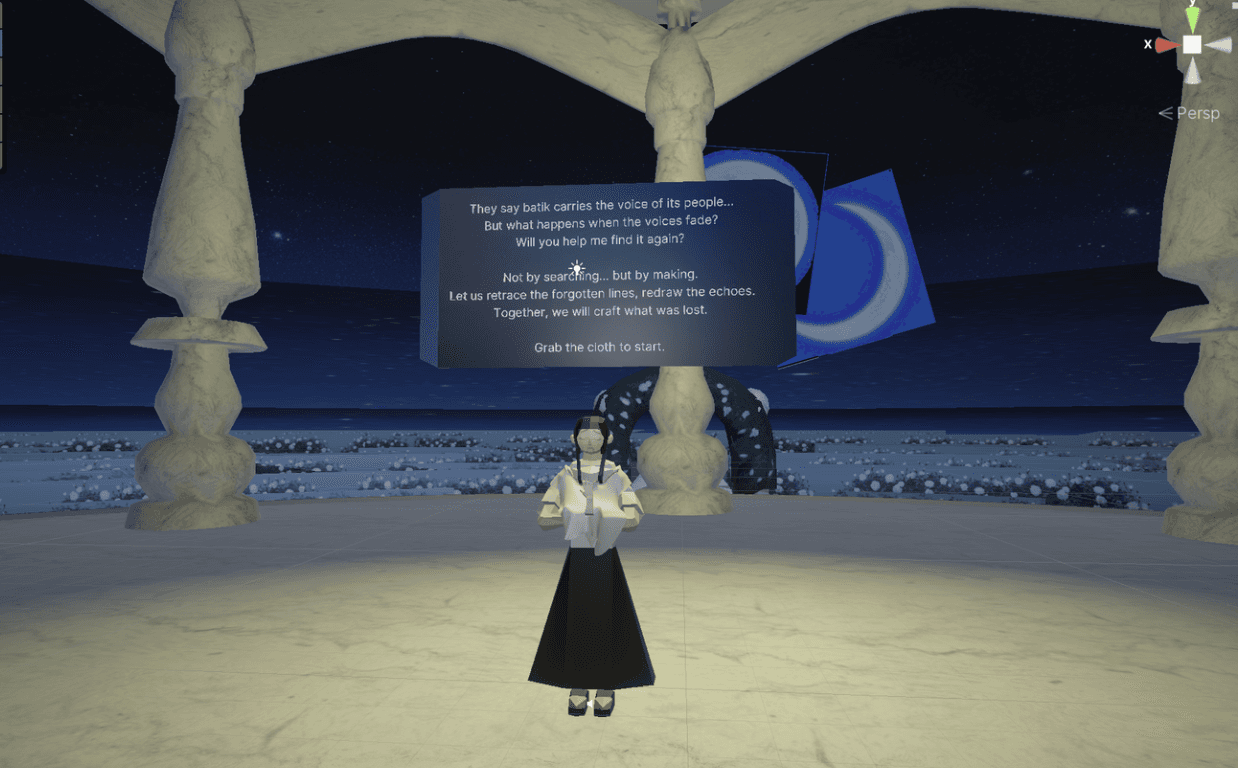
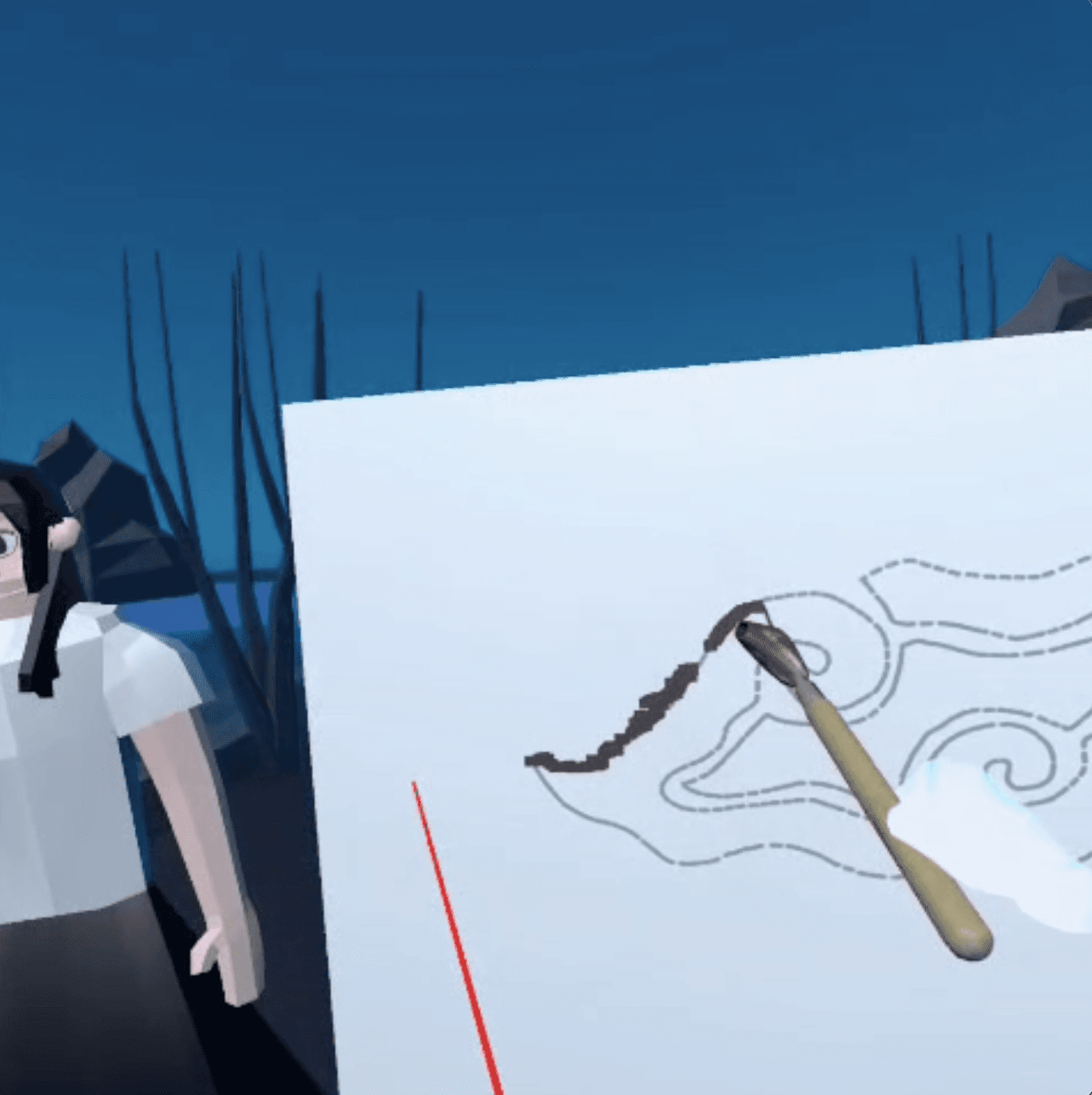
Echoes in Batik project focuses on providing VR cultural education experience in Batik making process blending gamification and storytelling which concentrates on 3 processes on tradtional Batik making, including drawing pattern with wax (ngelorod), adding colour to the pattern, and eliminating wax (lorod). It uses gamification and storytelling aspects such as narratives, progress, character, rewards, and reflection.
Immersive VR cultural education experience
Traditional Batik creation processes
Gamification and storytelling aspects
Inspiration or Problem Context
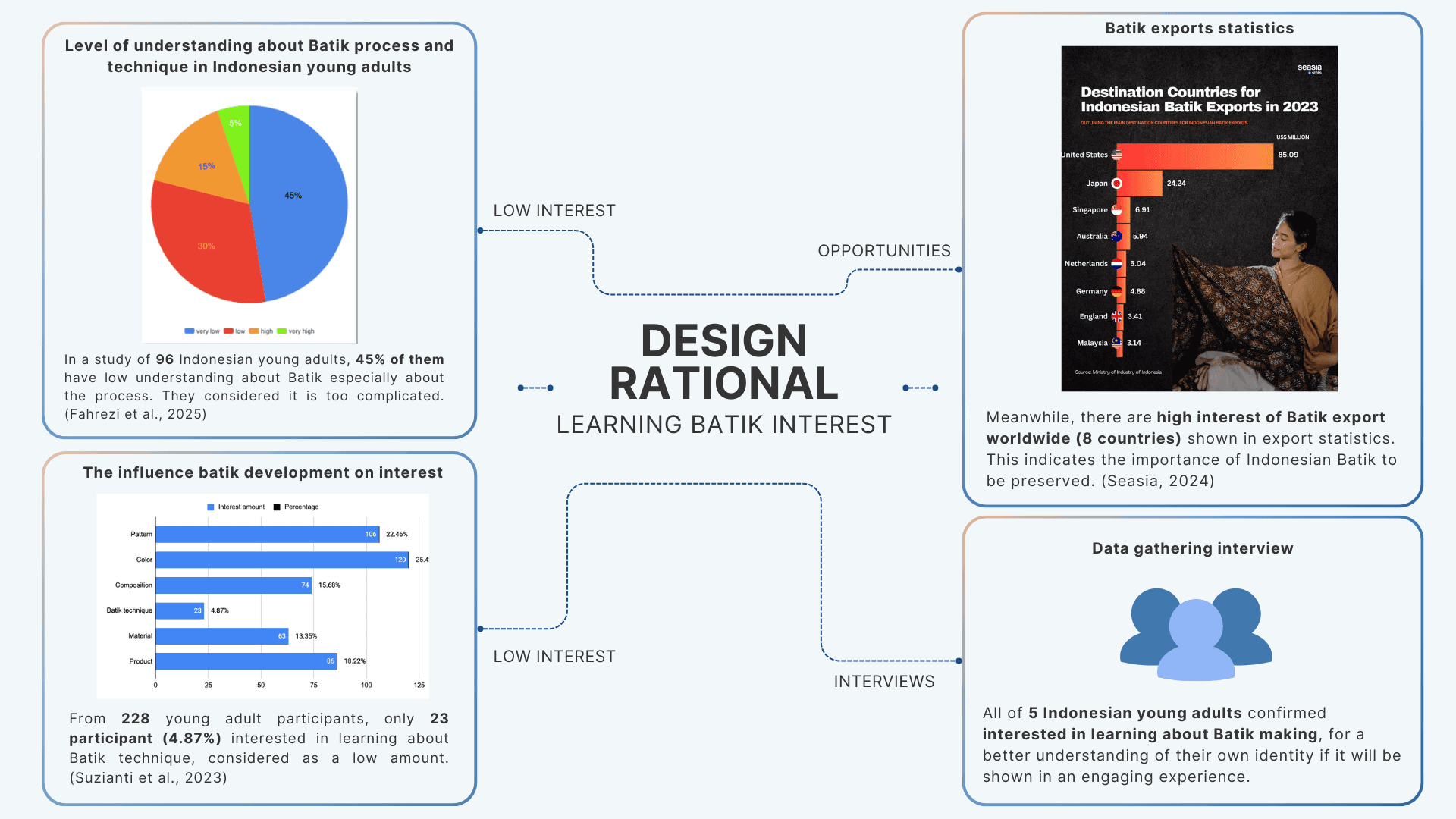
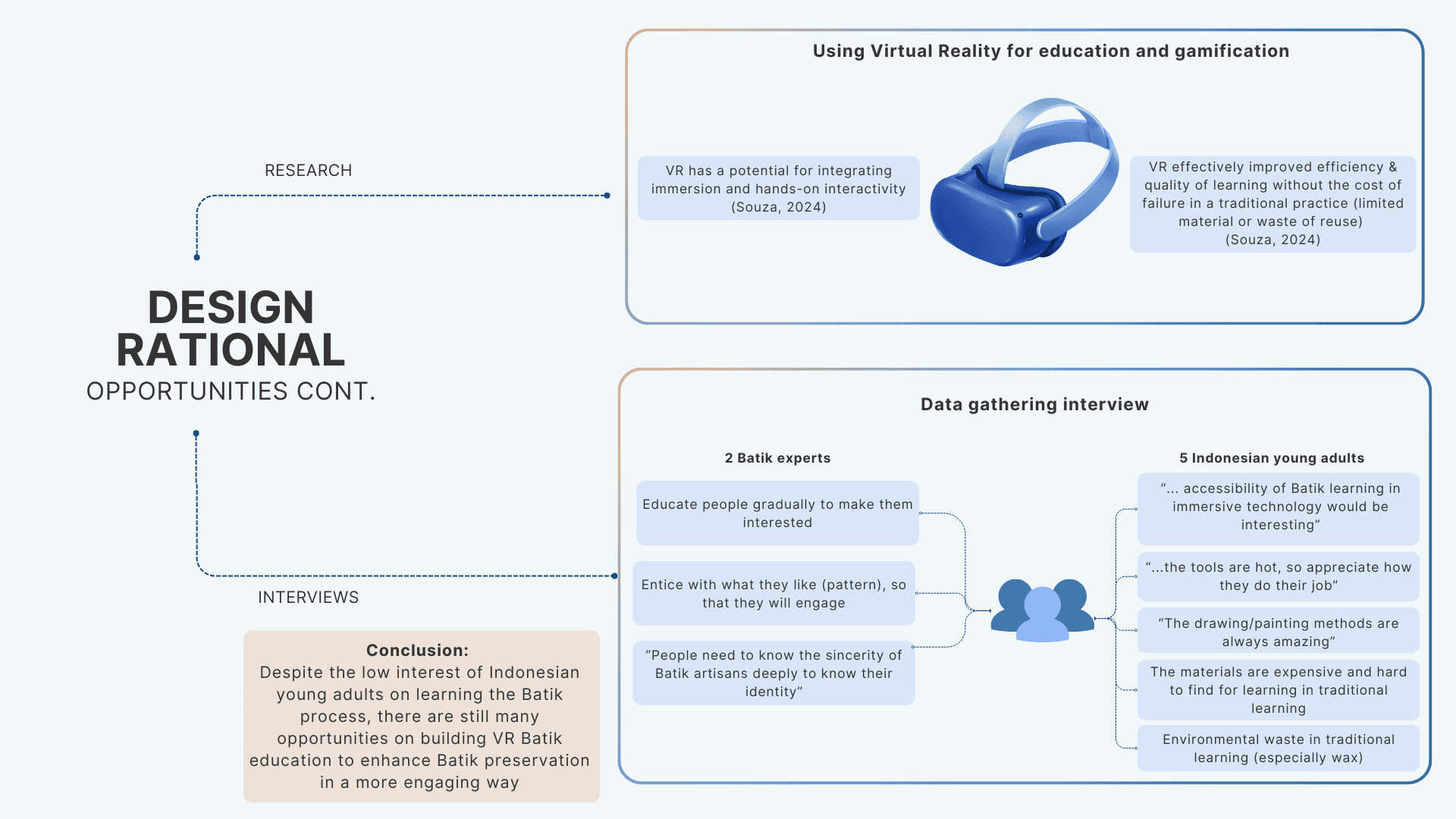
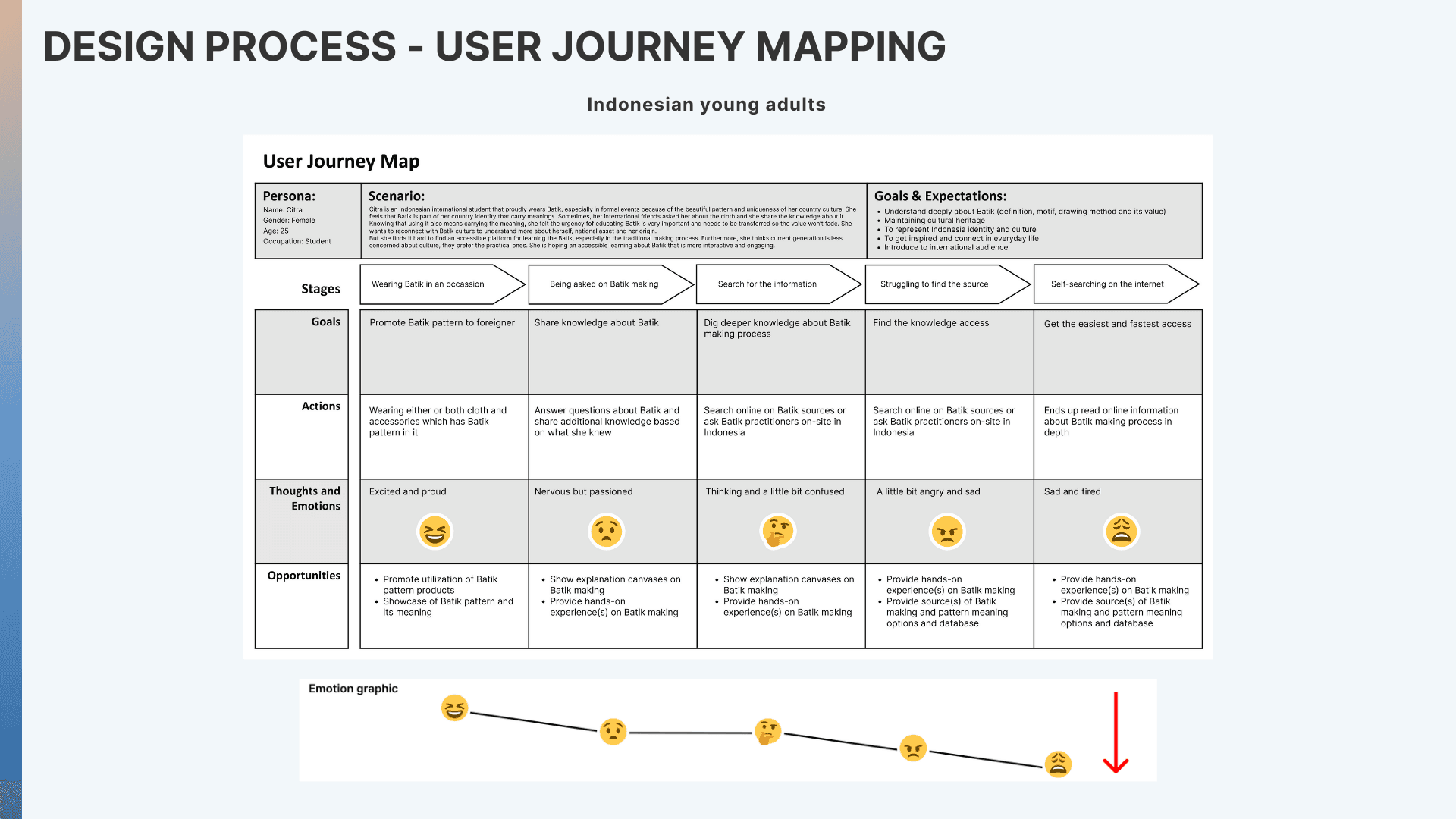
Based on research and data gathering, there is a low interest of learning of Batik making, while there is a high opportunity of interest of Batik recognition in a worldwide context and learning in a more engaging way using immersive technology (VR in this context).
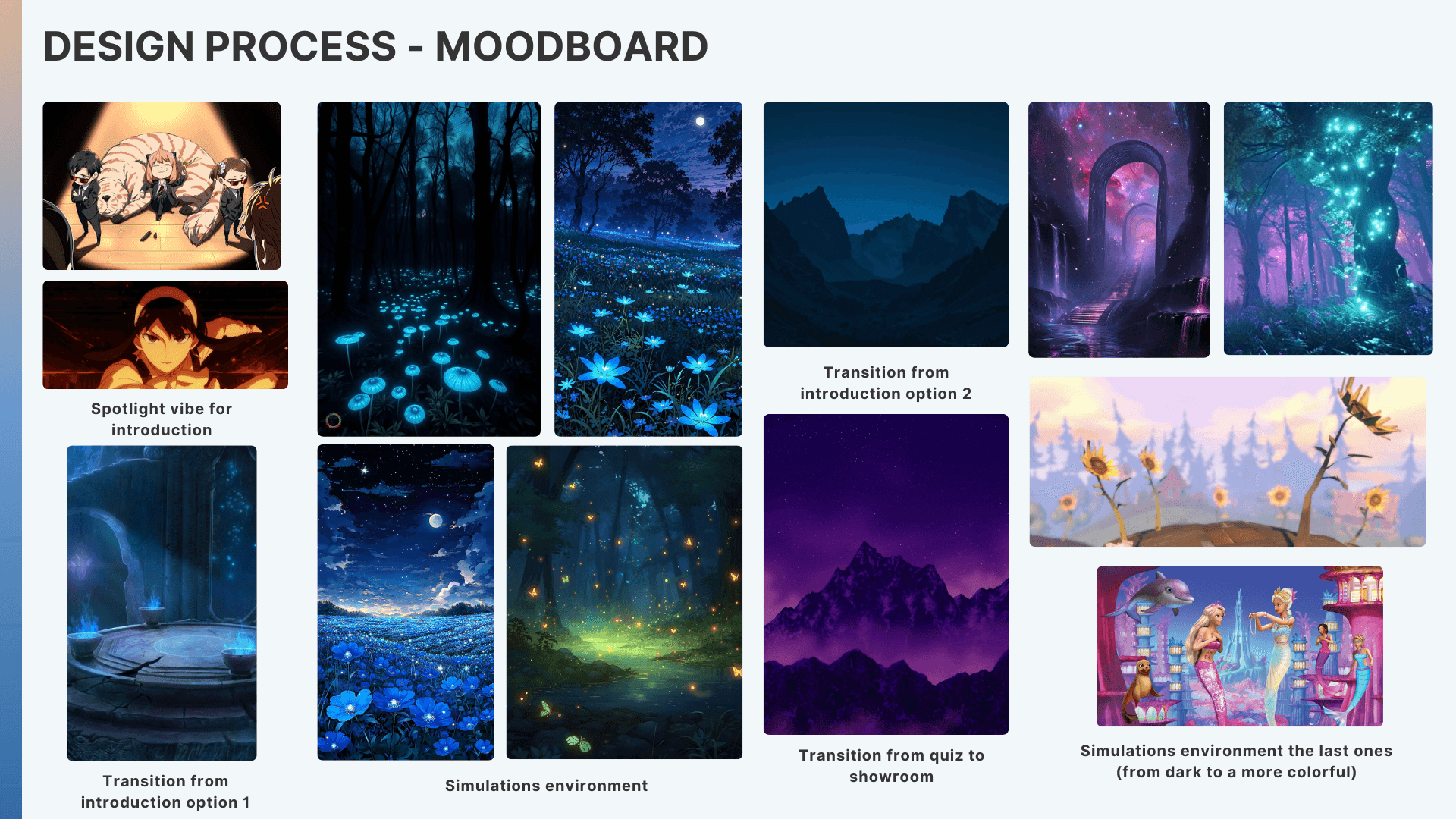
As for the inspiration, I asked users in data gathering on which movie favorite they like or what kind of design moodboard they prefer. This played a big role to the experience to shape the design and color palette. Here are the sneak peek of the brainstorming.
Storyboard and Scenario
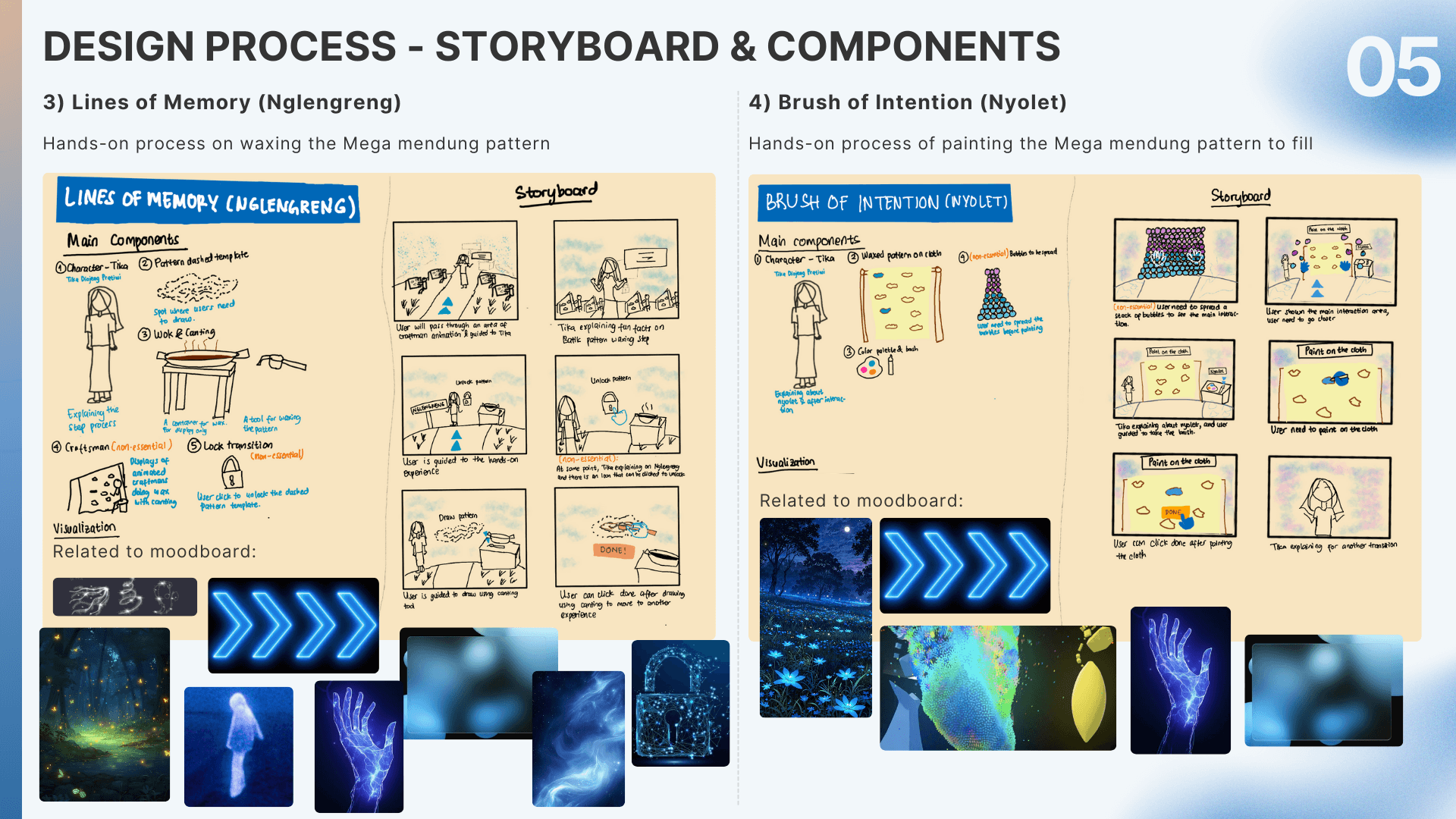
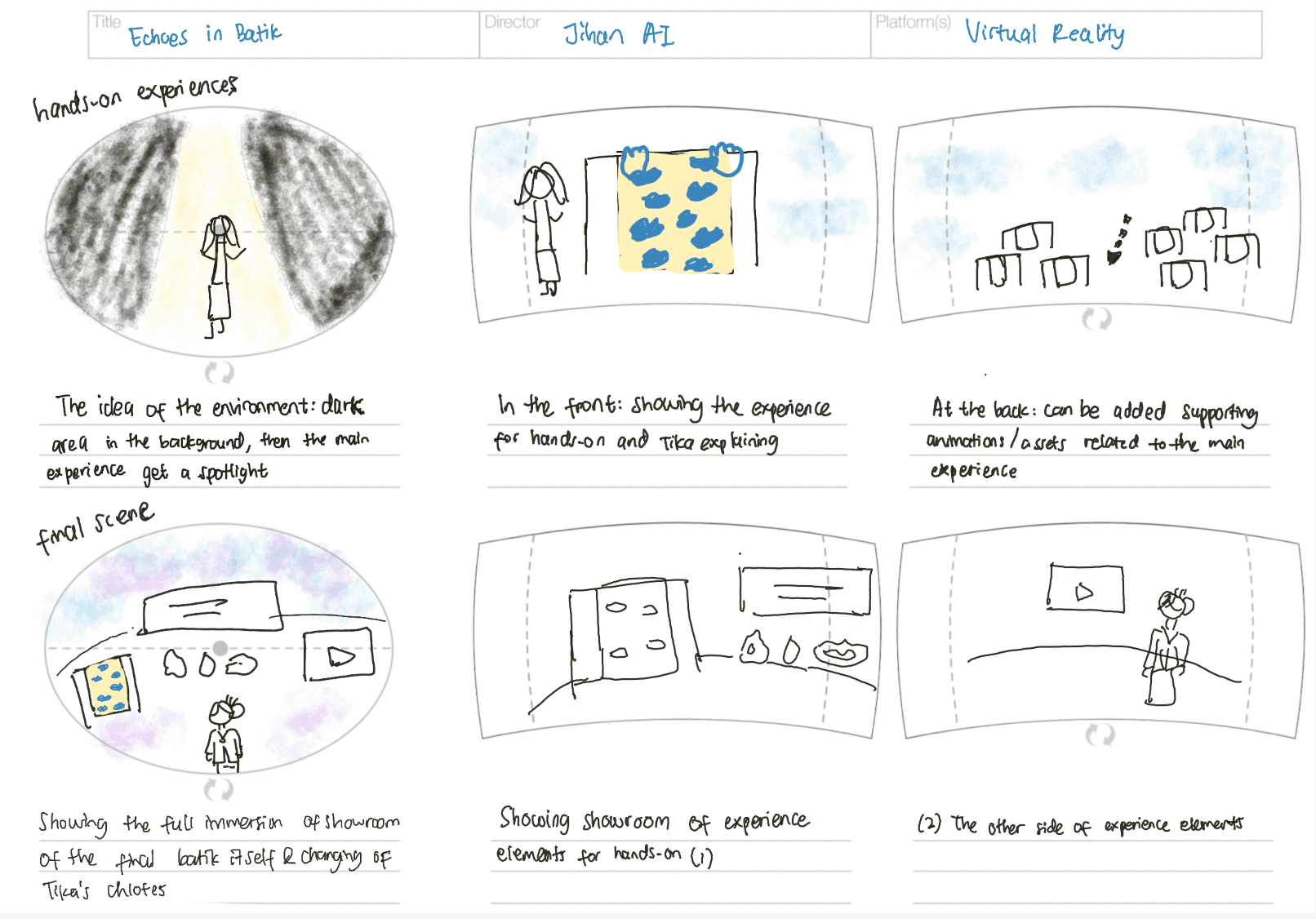
Developed storyboard and scenario to analyze the detailed interactions and visualize the outline on how it will be shown in virtual reality.
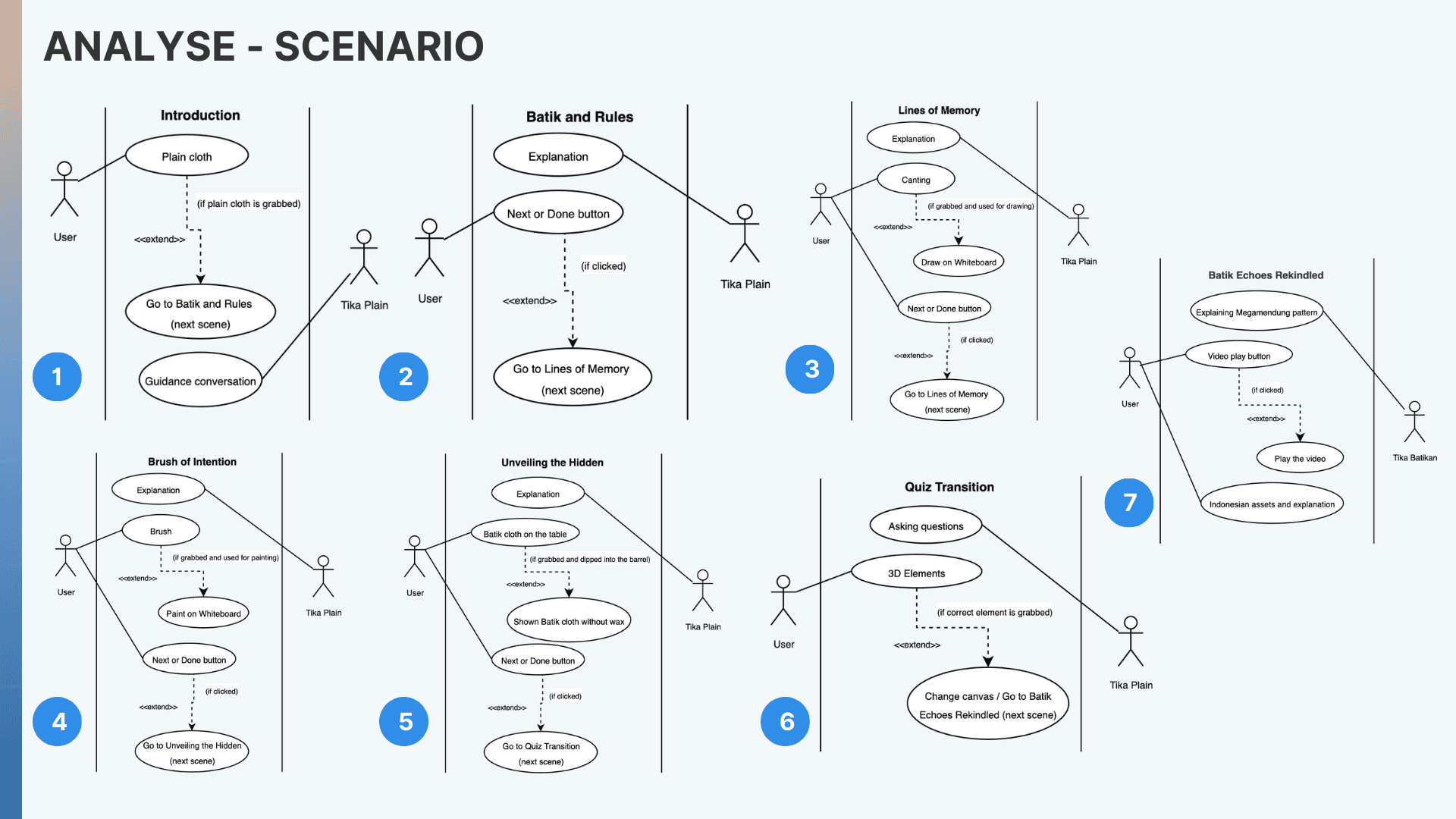
Scenario
Detailed flow of interactions in each scene in the experience that captures actions, elements, and players.
Storyboard
Visualization of the interactions between user, character, and elements in the immersive environment. There are two types of interactions:
Hands-on experiences: It shows the environment of hands-on experiences, with 2 main areas: hands-on experience and supporting spot showing animations and displays
Final scene: It shows the environment of showroom after quiz transition with all the main interactions gathered into one spot.
Character and Branding
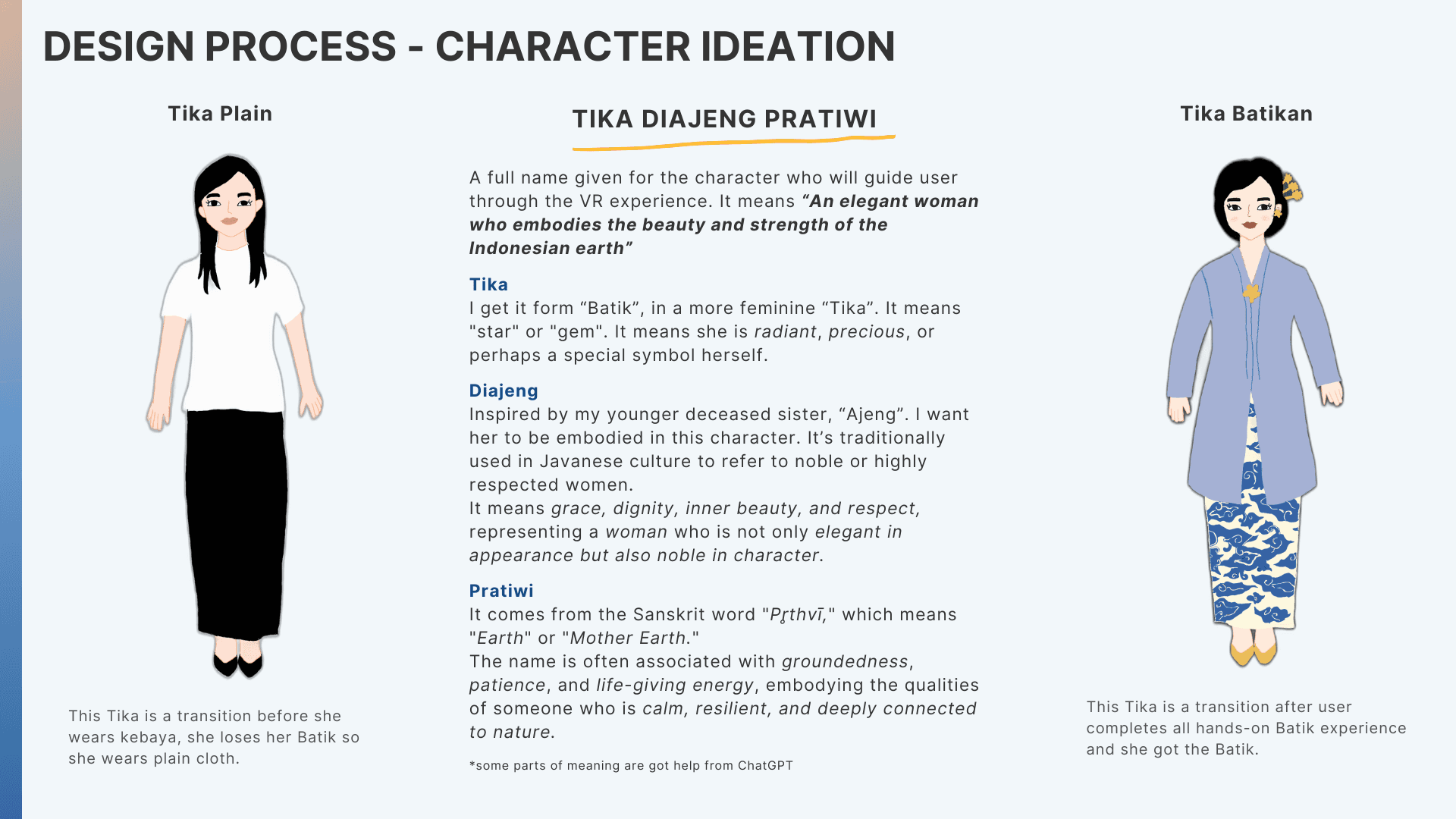
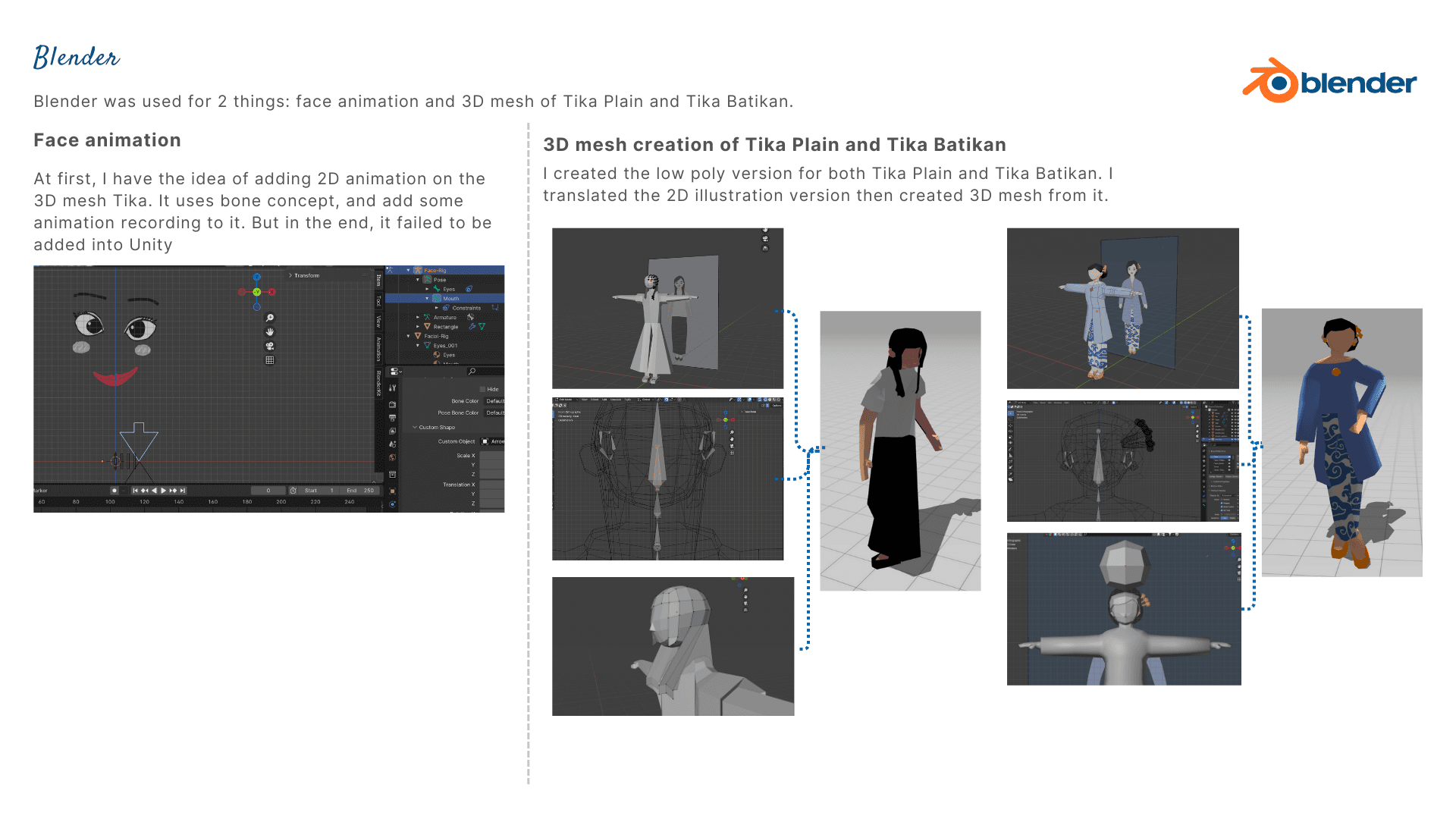
For a more engaging experience, a character involvement was developed named Tika. It was inspired from the Indonesian woman who wears traditional Indonesian Batik as a signature character. She will going through phases following the Batik creation experiences to indicate finding her identity. Tika was also developed in 3D to activate her animation.
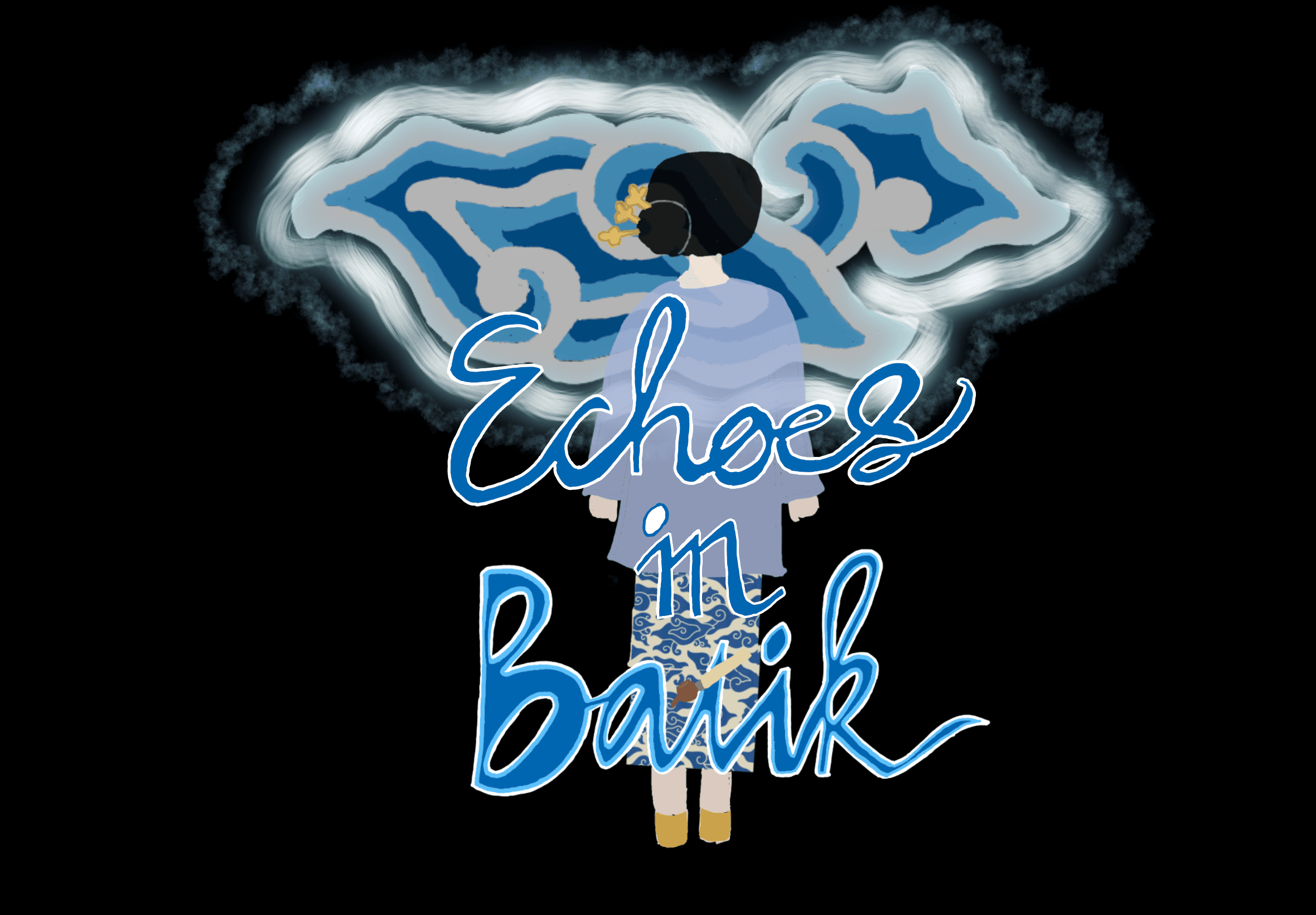
As for the branding, an illustration was developed and used for the introduction before entering the whole virtual reality experience.
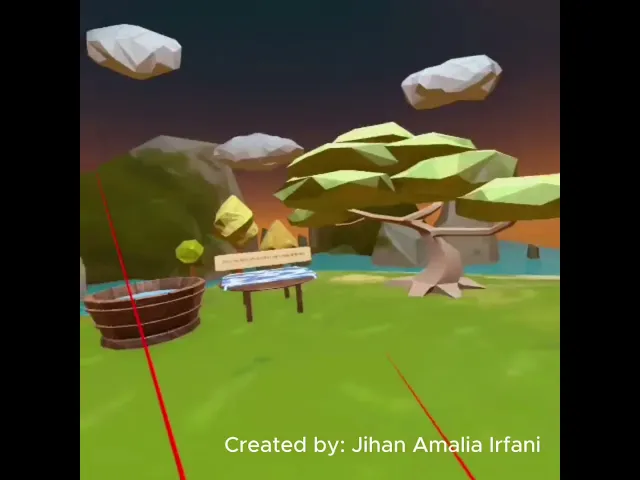
Experience in action
Key takeaways
Did user testing to 10 user participants, with the requirement of signing participant consent. Then, they are guided with tutorials of how to use the VR and controllers in the experience. Use case test document was also generated with some user tasks and require users to think out loud for giving feedbacks. After that, user was guided to fill System Usability Score test (SUS) in a google form to gather quantitative data.
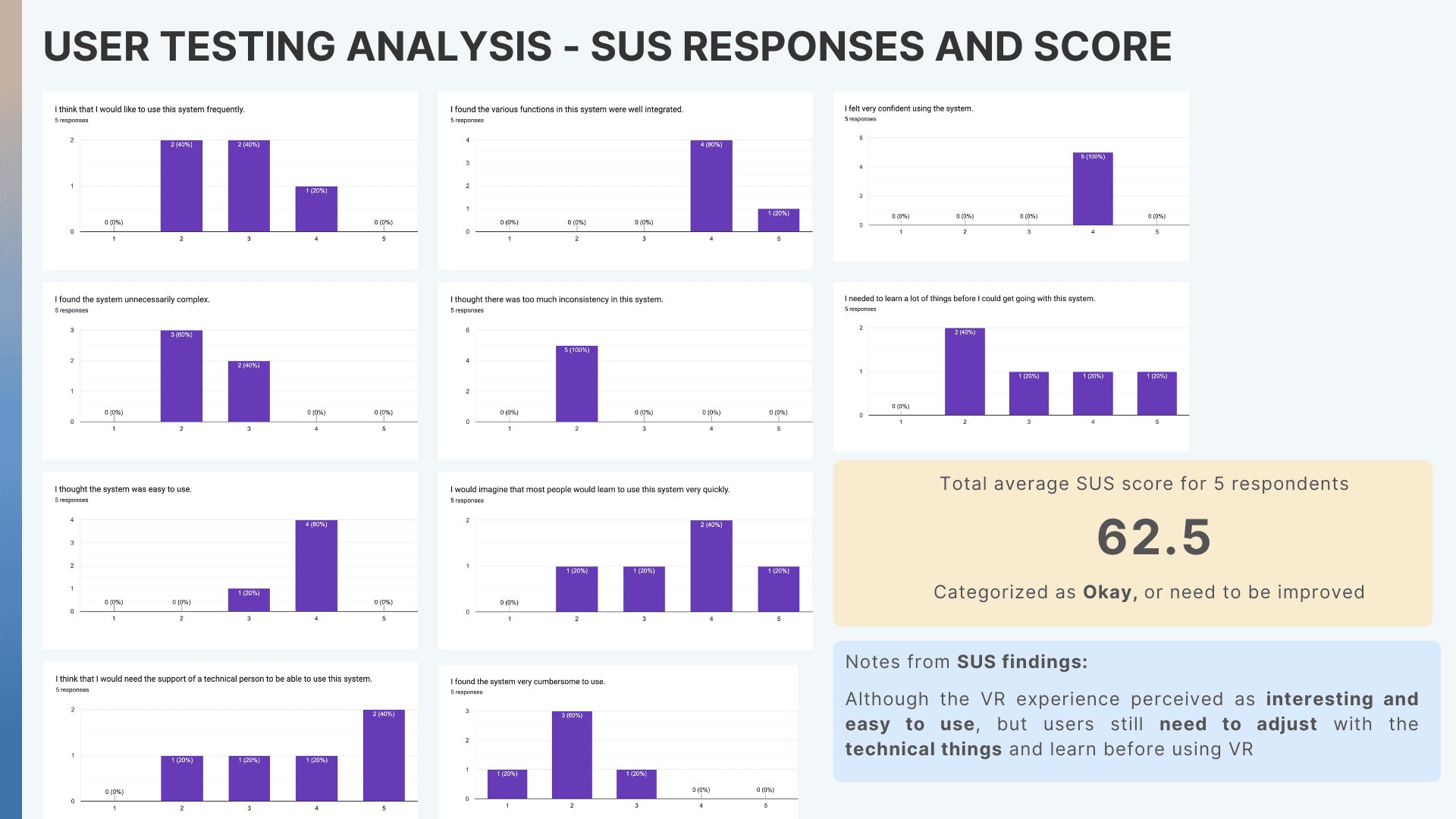
Based on results, the overall experience scored okay, with need to be improved in terms of feature and technical aspects.
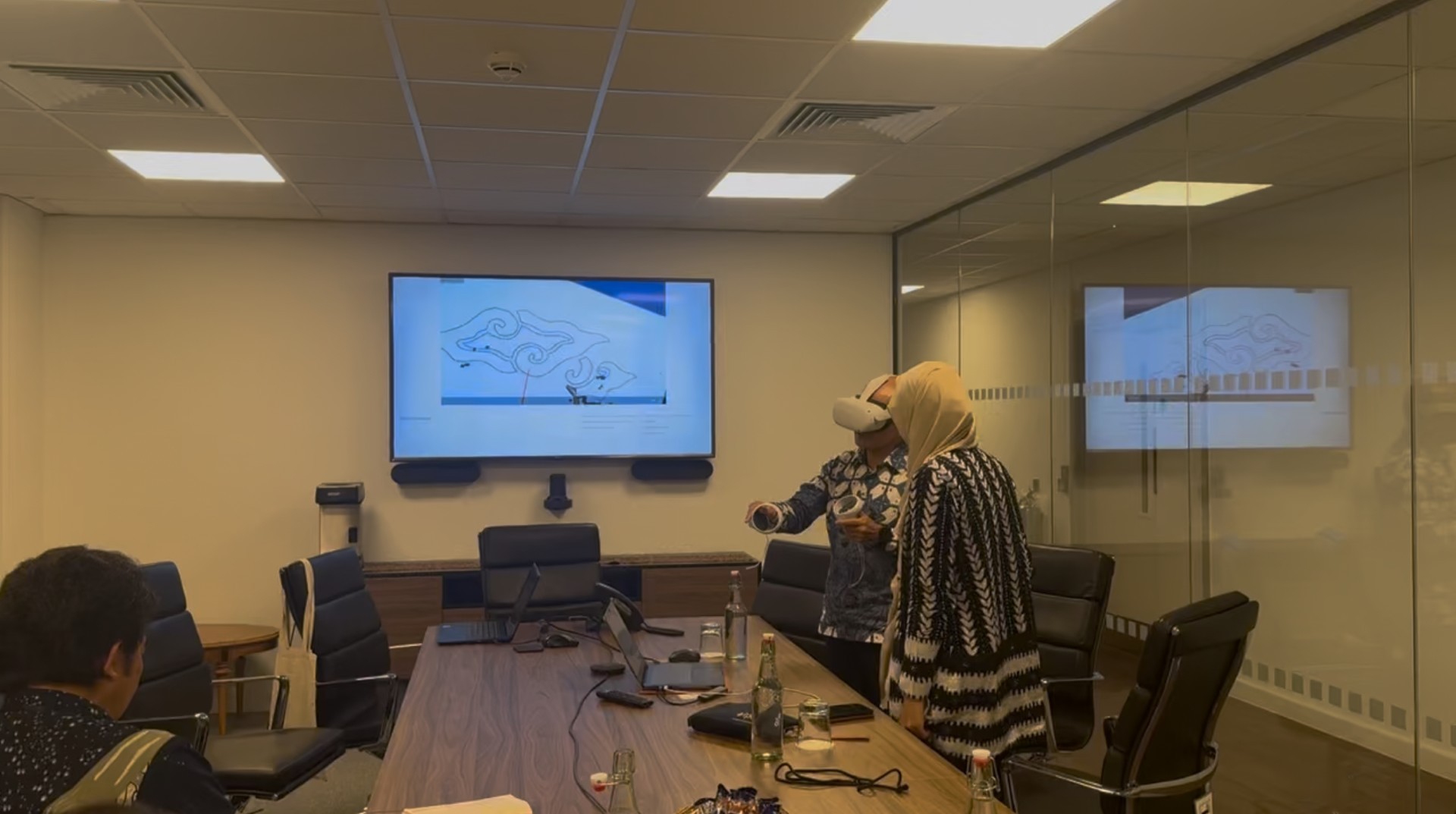
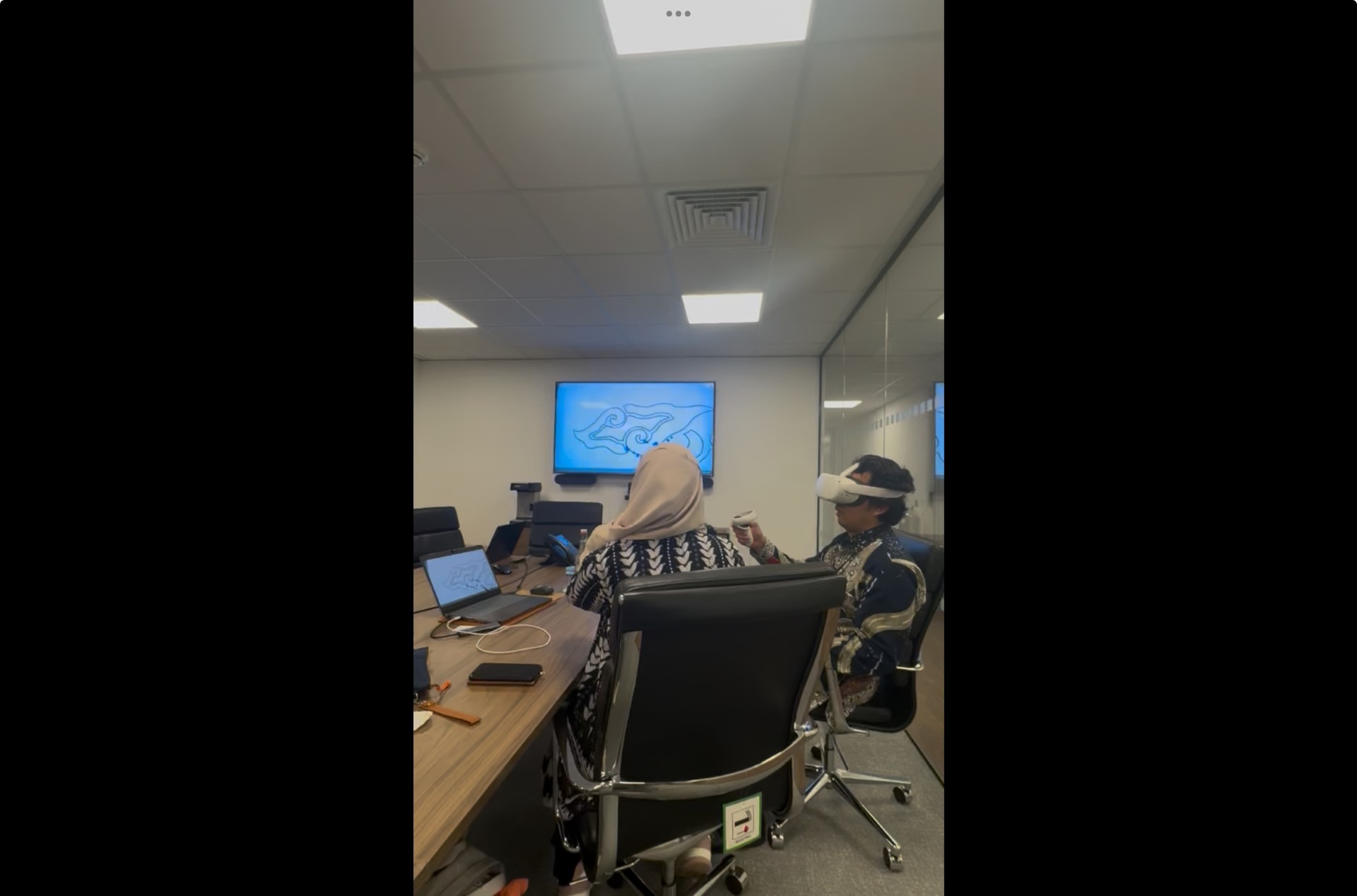
Presented in Indonesian Embassy in London
Then, Echoes in Batik experience was invited to be presented and tested in Indonesian Embassy in London on 2th October 2025 in front of Desra Percaya, PhD (Ambassador of Indonesia to the United Kingdom) and Professor Agus M. Ramdhan (Attaché for Education and Culture). Their feedbacks are appreciative and hoped that this project can be developed for future contribution in immersive technology.
Skills gained
Building Echoes in Batik taught me to be more appreciative for artists. Especially in technology emerging era, artists need to adapt with technology and incorporate it into design. Building this project made me more disciplined in terms of managing expectations, simplifying complex interactions based on time and resource limitations, and consistently discover user insights to bridge the gap of advanced technology and user's comprehension.
Need to improve
There are two sections of what needs to be improved from this project.
Regarding VR experience
Still need to be developed based on user feedbacks (later development)
The project scope is still too big, even can be separated into more than two project(s)
Need to prioritize accuracy of the experience
Regarding user testing (UT)
Still needs to be tested or ask feedbacks from Batik experts
Need more than 1 person to do the UT: technical helper, notetaker, project owner/creator, event organizer
References
Fahrezi, W.D., Sariyatun, S. and Sudiyanto S. 2025. The Need for Augmented Reality Batik Media to Increase Cultural Love for Learning, Drawing, Design, and Craft Production in Vocational High Schools. Social, Humanities, and Educational Studies (SHES): Conference Series. [Online]. 8(1), pp.708-716. [Accessed 20 April 2025]. Available from: https://doi.org/10.20961/shes.v8i1.99114
Suzianti, A., Amaradhanny, R.D. and Fathia, S.N. 2023. Fashion heritage future: Factors influencing Indonesian millenials and generation Z’s interest in using traditional fabrics. Journal of Open Innovation: Technology, Market, and Complexity. [Online]. 9(4), pp.1-19. [Accessed 17 April 2025]. Available from: https://doi.org/10.1016/j.joitmc.2023.100141
Seasia. 2024. Destination Countries for Indonesian Batik Exports in 2023. [Online]. [Accessed 22 April 2025]. Available from: https://seasia.co/infographic/destination-countries-for-indonesian-batik-exports-in-2023
Souza, A.M.d.C. 2024. XiloVR: Preserving Cultural Heritage through a Virtual Reality-Based Woodcutting Simulation. SVR '24: Proceedings of the 26th Symposium on Virtual and Augmented Reality. [Online]. pp.234-241. [Accessed 24 March 2025]. Available from: https://doi.org/10.1145/3691573.3691589